
What Lies Beneath the Surface: What a rare quillwort reveals about restoration at Blazing Star Prairie
by Mallory Sanchez
Introduction
Dinosaurs no longer roam the earth, but ancient plant lineages still survive. A recent discovery at Blazing Star Prairie has caused excitement among botanists and conservationists.
Staff and volunteers have been hard at work restoring the preserve from former pastureland to a thriving tallgrass prairie and wetland system by establishing water canals, planting native species, and seeding the prairie with no-till drills.
After the wetlands filled with water last fall, an unusual plant called quillwort emerged in great quantities. Because it was not included in the seed mix, its appearance indicates that it had been lying dormant in the prairie's seed bank, waiting for the right conditions to germinate.
Quillworts belong to one of Earth’s most ancient plant lineages, dating back millions of years. Quillwort can be difficult to identify because its narrow leaves make it easy to mistake for grasses or sedges.
In an effort to identify the species, Dr. Lisa George, a pteridologist who studies ferns and lycophytes, was invited to investigate. Dr. George has been conducting research with Texas Parks and Wildlife and BRIT (the Botanical Research Institute of Texas) to locate and study quillwort populations across Texas.
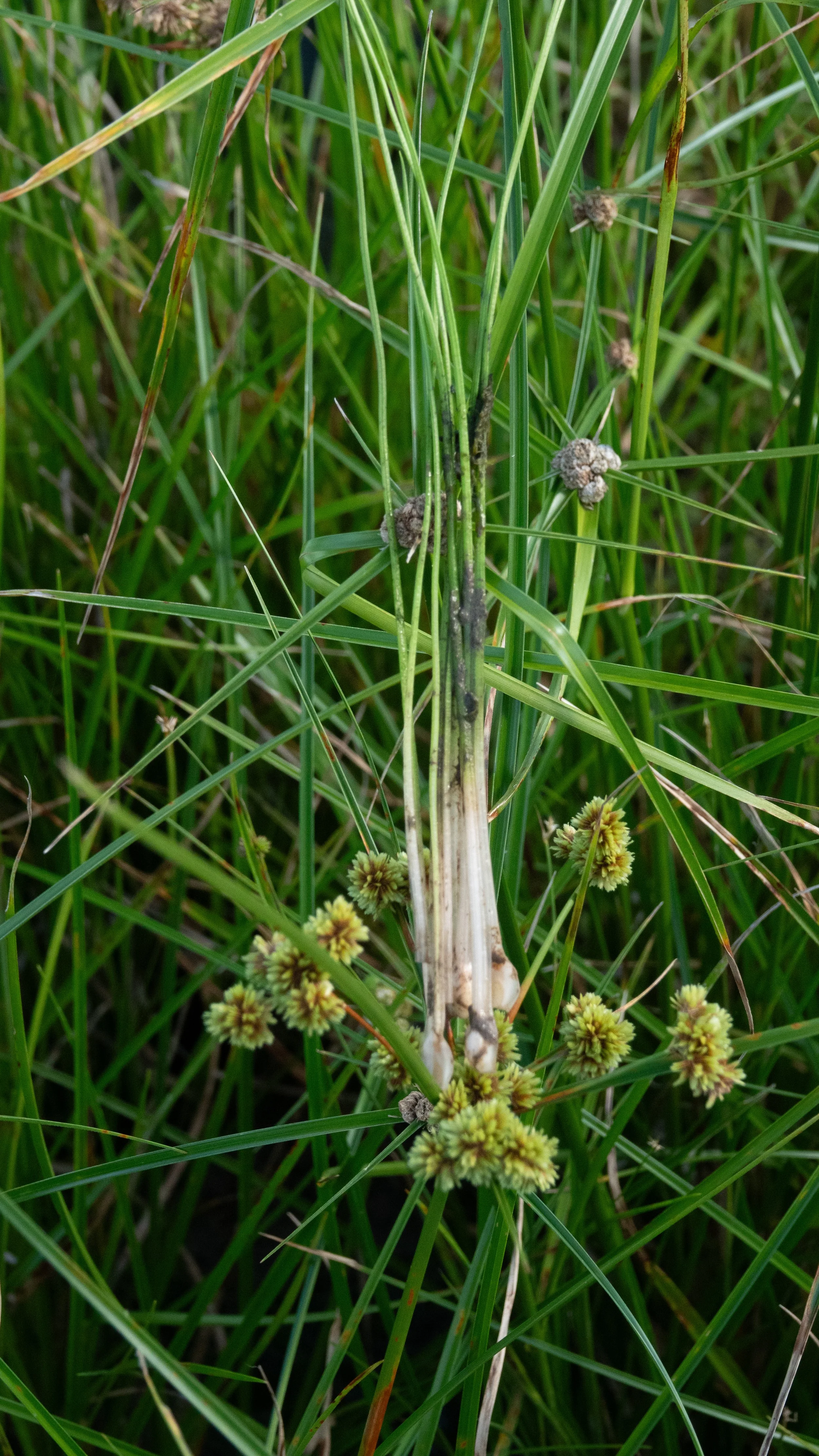
Photo by Bethany Foshee.
Dr. George’s Quillwort Research
As Dr. George shared her knowledge about the plant, there was a noticeable excitement in her responses. “Quillworts have become a frontier of botanical discovery in Texas even though they are some of the oldest plants around,” she shared, “quietly doing their thing for millions of years until people started to notice them.” Part of Dr. George’s research is to locate as many quillwort populations as possible and learn about their biology and population genetics.
The quillwort collection from Blazing Star is a significant piece of the puzzle that fills a gap between her collections from Houston and College Station. “The prairie lies right in the center of what we believe may be a hybridization zone between eastern woodland plants and western prairie plants,” explained Dr. George. Could different species live in different habitats? Are hybrids involved? Or can one species adjust to both habitats? Dr. George hopes to find the answers by conducting genetic testing on the quillwort specimens in this unique area.
It is challenging for scientists to study quillwort populations in Texas because the majority of land is privately owned. “It’s like trying to understand the picture on a face of the puzzle when you only have access to a few puzzle pieces,” explained Dr. George. When it comes to nature preserves, we often focus on the wildlife and native vegetation they protect. The quillwort discovery is an example of how public access and careful stewardship can transform lands into living laboratories, creating opportunities for researchers like Dr. George to further scientific discovery.
Yet one question remains unanswered. How did the quillwort get there? According to Dr. George, quillworts generally do not disperse over long distances or quickly colonize new areas. One possibility is that dormant spores were already in the soil.
While the explanation has not been confirmed, the restoration may have recreated conditions the quillwort needed to grow.
Blazing Star Prairie Conservation

Restored wetlands at Blazing Star Prairie, photo courtesy of Berri Moffett
The land at Blazing Star Prairie had lost much of its native plants, soil nutrients, and wildlife due to generations of cattle grazing and crop farming. Beginning in 2024, restoration work at the 68-acre prairie has focused on restoring native grasses and wetland habitats. By using historical satellite imagery, restoration teams excavated and restored the wetlands in their former locations.
The preserve serves multiple ecological functions, including flood mitigation, water quality improvement, and wildlife habitats. As an Audubon Global Important Bird Area, it provides important habitat for migratory birds including Sandhill Cranes, American Avocets, and White-faced Ibises. Texas’s first certified conservation cemetery, called Nature’s Burial, occupies 7.5 acres of the Blazing Star Prairie, preserving and protecting the land for generations to come.
As a result of restoration efforts, the land has slowly transformed into a landscape of renewed life, with wildflowers blooming and wildlife returning. The unexpected discovery of quillwort hints at what restoration can make possible and reminds us that science does not always have all the answers. What other surprises might be revealed as the native grasslands and wetlands continue to recover? One can’t help but hope that other long lost plants and animals may reappear as the Blazing Star Prairie continues to flourish.
Visit Blazing Star Prairie
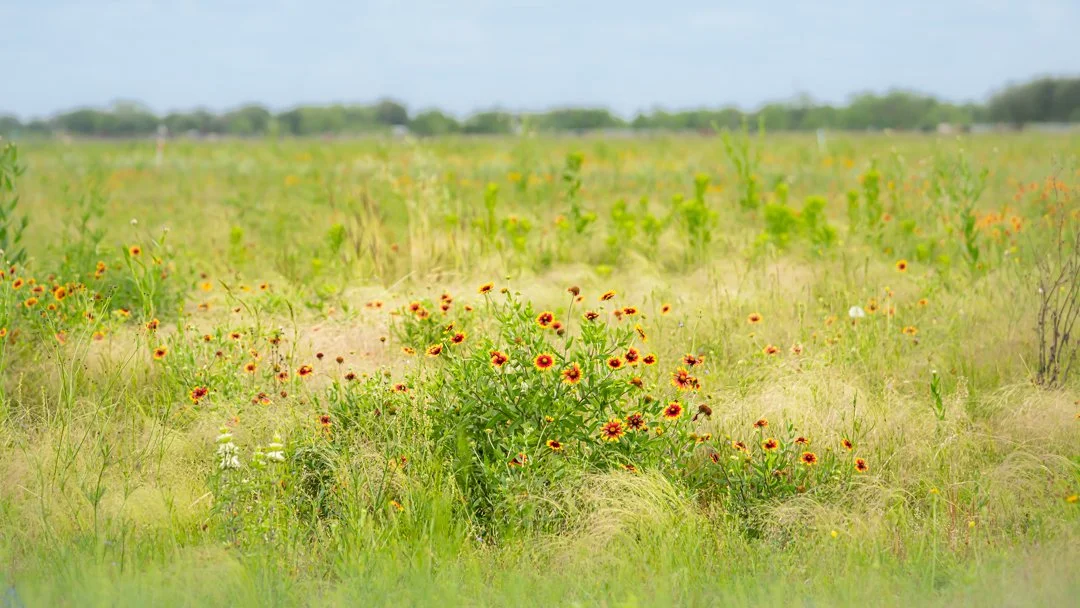
Photo courtesy of Paul Stirling.