by Katie Sierra
Introduction
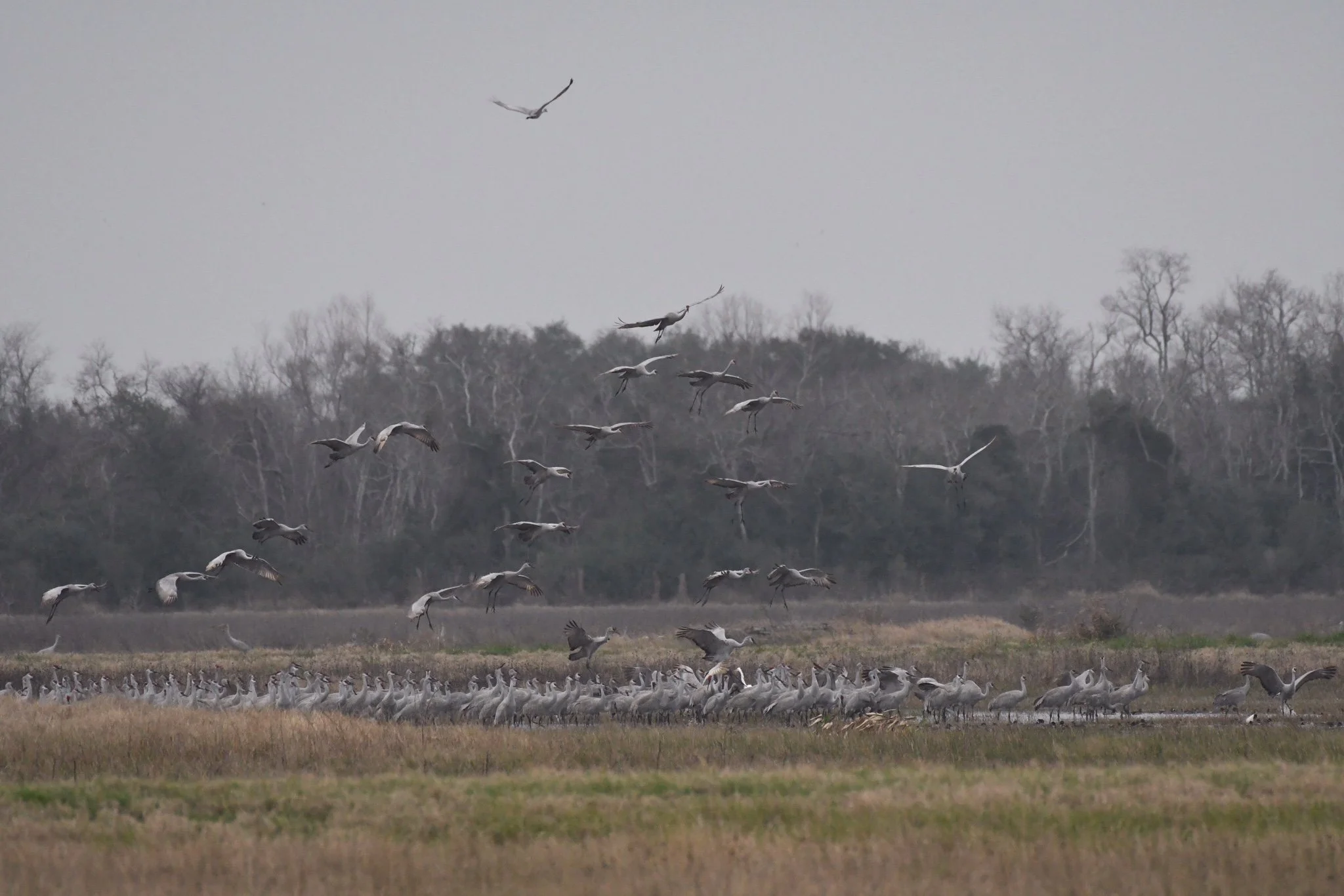
Sandhill cranes roosting at Baldpate Farms. Photo courtesy of Roger Soape.
Permanently protected through a conservation easement held by Coastal Prairie Conservancy (CPC), Baldpate Farms is a 175-acre property near Midfield in Matagorda County where nearly two decades of dedicated stewardship have created thriving habitat for native plants and migratory wildlife. Its history and ongoing restoration efforts demonstrate how private landowners and conservation partners can work together to restore and protect Southeast Texas's natural landscapes.
A conservation easement is a voluntary legal agreement that permanently protects a property's conservation values while allowing the land to remain in private ownership. The agreement is tied to the land itself, meaning its protections remain in place forever, even if the property changes ownership. At Baldpate Farms, CPC's conservation easement ensures the property's important natural habitats remain protected while allowing continued wildlife management and other compatible land uses.
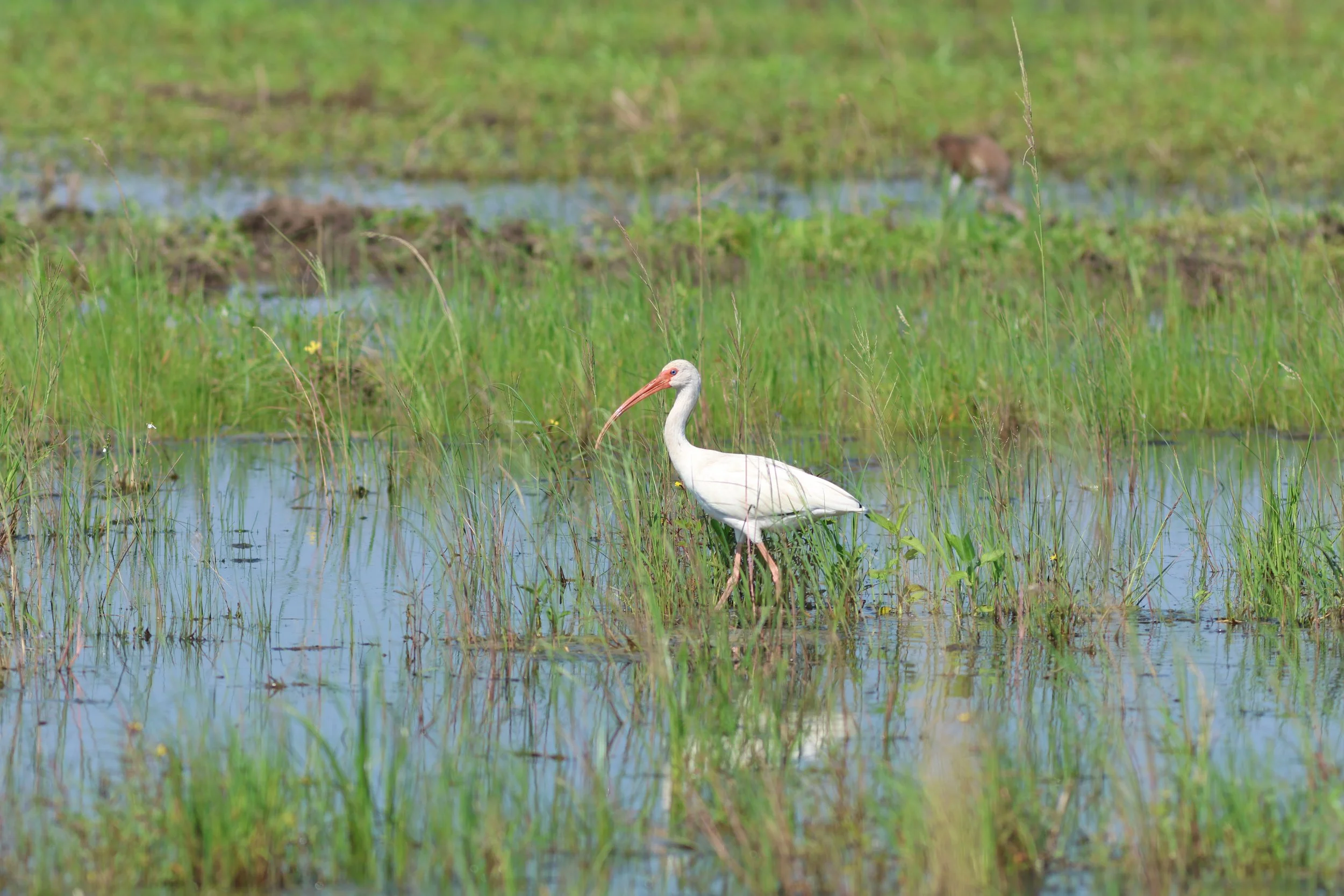
White Ibis spotted in the wetlands at Baldpate Farms. Photo courtesy of Ryan Phillips.
When landowner Roger Soape purchased Baldpate Farms in 2008, he envisioned a place for waterfowl hunting and wildlife habitat. Once a rice farm, the property had been abandoned for many years, allowing invasive vegetation and dense brush to overtake much of the landscape.
Since then, Roger and his conservation partners have restored approximately 95 acres of managed freshwater wetlands and 35 acres of native tallgrass prairie, alongside 45 acres of live oak woodlands. Today, these habitats support diverse native plants, wintering waterfowl, and migratory shorebirds.
Restoring Freshwater Wetlands with Ducks Unlimited
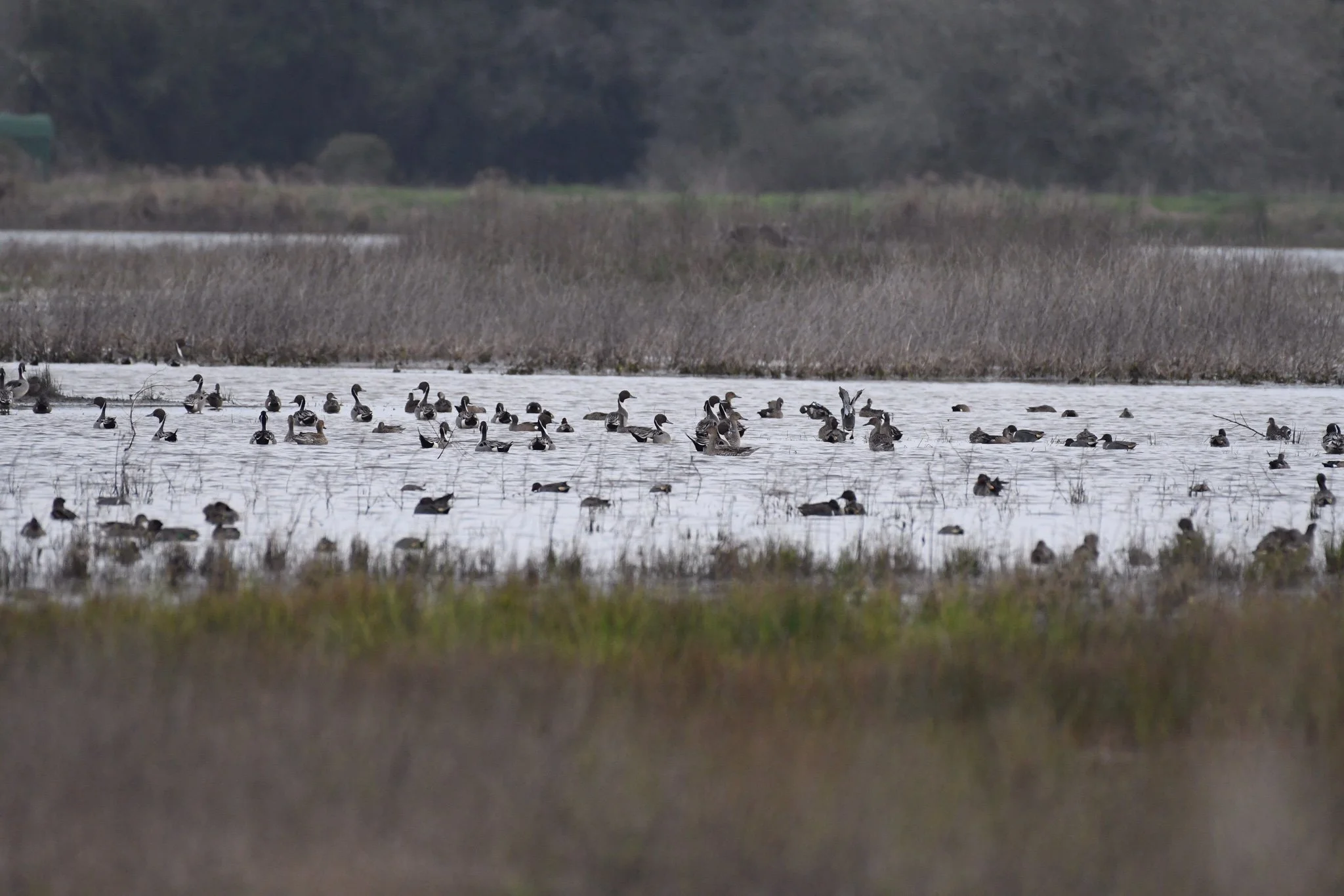
Restored wetland habitat at Baldpate Farms. Photo courtesy of Roger Soape.
Through Ducks Unlimited's Texas Prairie Wetlands Project, Roger received technical and financial assistance to develop two managed wetland units encompassing approximately 50 acres. A subsequent project expanded the system to four units totaling approximately 95 acres.
The restoration involved constructing levees, installing water-control structures, and adapting existing agricultural infrastructure to create freshwater wetlands. Today, these habitats support moist-soil plants such as smartweed, duck potato, and toothcup, along with wintering waterfowl including northern pintails, blue-winged teal, mottled ducks, snow geese, and sandhill cranes.
For the past three years, Baldpate Farms has also received support through the federal Migratory Bird Recovery Initiative (MBRI), administered in Texas by the USDA Natural Resources Conservation Service (NRCS). The program has reimbursed Roger for costs associated with disking and providing water for the wetlands, helping maintain productive habitat for migratory birds.
Restoring Native Prairie with Texas R.I.C.E.
Beginning around 2010, Roger worked with Bill Stransky, Executive Director of Texas R.I.C.E. (Texas Rice Industry Coalition for the Environment), to restore approximately 35 acres of former agricultural fields dominated by invasive and undesirable vegetation.
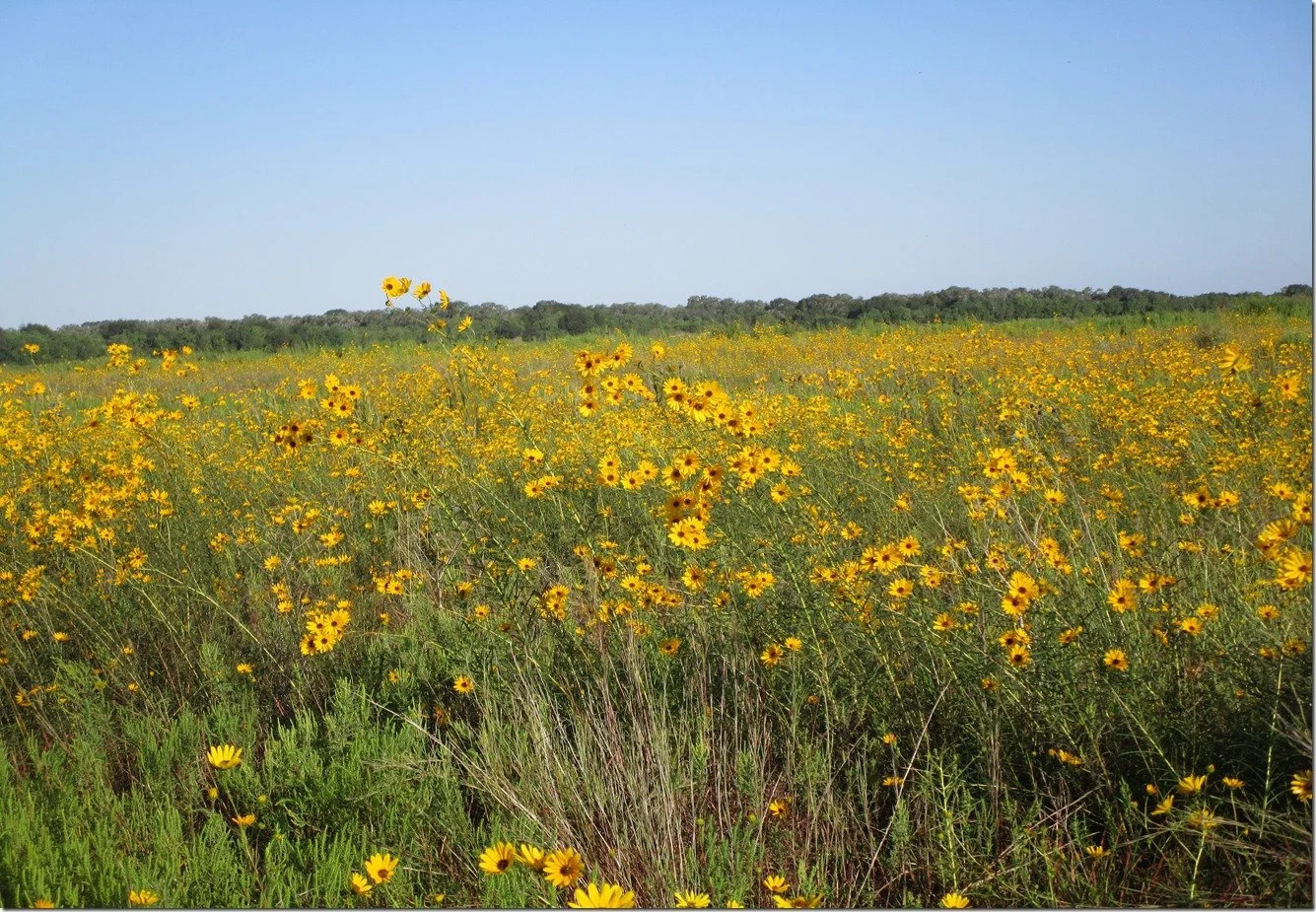
Restored prairie at Baldpate Farms. Photo courtesy of Bill Stransky
The initial restoration used native prairie seed harvested from Pierce Ranch with a specialized bristle-brush harvester, which collects seed from standing vegetation. A smaller follow-up seeding targeted areas where native plants had struggled to establish.
Over the next 12 years, Bill and Roger continued enriching the prairie with a diverse mix of native grasses and wildflowers, hand-collected from local prairies across Southeast Texas, including sites in Brazoria, Calhoun, Colorado, Fort Bend, Harris, Jackson, Matagorda, and Wharton counties.
"In my experience, you really, really need locally collected seed," Bill explains, emphasizing the importance of preserving local plant genetics in prairie restoration.
Today, the restored prairie supports a remarkable diversity of native plants, including Indiangrass, switchgrass, eastern gamagrass, rattlesnake master, bracted grayfeather, Texas coneflower, and Maximilian sunflower. Some species emerged years after their seeds were first scattered, illustrating the patience and persistence required for prairie restoration.
Baldpate Farms now serves as a seed-harvesting site for other prairie restoration projects, extending its conservation benefits beyond the property.
"The diversity of grasses and forbs is tremendous," said Bill. "Because of Mr. Soape's efforts, dedication and skill, it has been transformed into a highly diverse prairie."
Monitoring Migratory Shorebirds with CBBEP
Beyond supporting wintering waterfowl, Baldpate Farms provides important habitat for migratory shorebirds traveling thousands of miles between their breeding and wintering grounds.
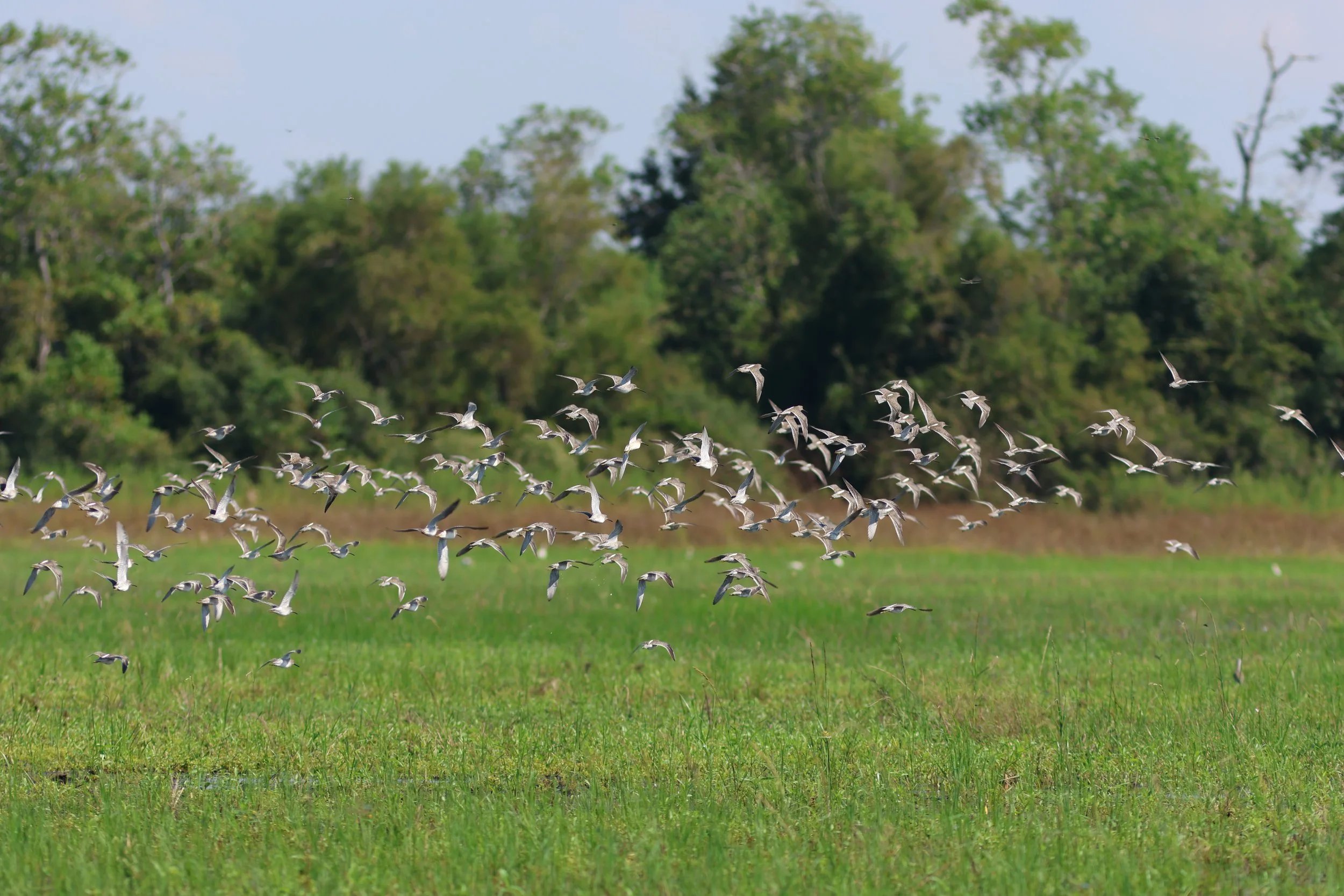
Long-billed Dowitcher flock at Baldpate Farms. Photo courtesy of Ryan Phillips.
The Coastal Bend Bays & Estuaries Program (CBBEP) has surveyed Baldpate Farms to better understand how migrating shorebirds use privately managed wetlands along the Texas Gulf Coast. This research has helped inform CBBEP's shorebird habitat incentive program, which compensates agricultural producers and waterfowl managers for providing shorebird habitat.
In October 2026, CBBEP researchers tracked a satellite-tagged Lesser Yellowlegs, originally captured near Seadrift in Calhoun County, to Baldpate Farms. Upon visiting, they observed hundreds of Long-billed Dowitchers and Least Sandpipers, along with dozens of yellowlegs, Black-necked Stilts, and Wilson's Snipes.
Roger had recently disked and shallowly flooded the wetland units, creating favorable feeding conditions for shorebirds by encouraging aquatic invertebrates that serve as an important food source.
"Baldpate Farms, like many moist-soil operations, can hold immense numbers of migratory shorebirds when conditions are right, especially in the weeks following the initial discing and flooding of fields," explained Ryan Phillips, Migratory Shorebird & Waterbird Habitat Specialist with CBBEP.
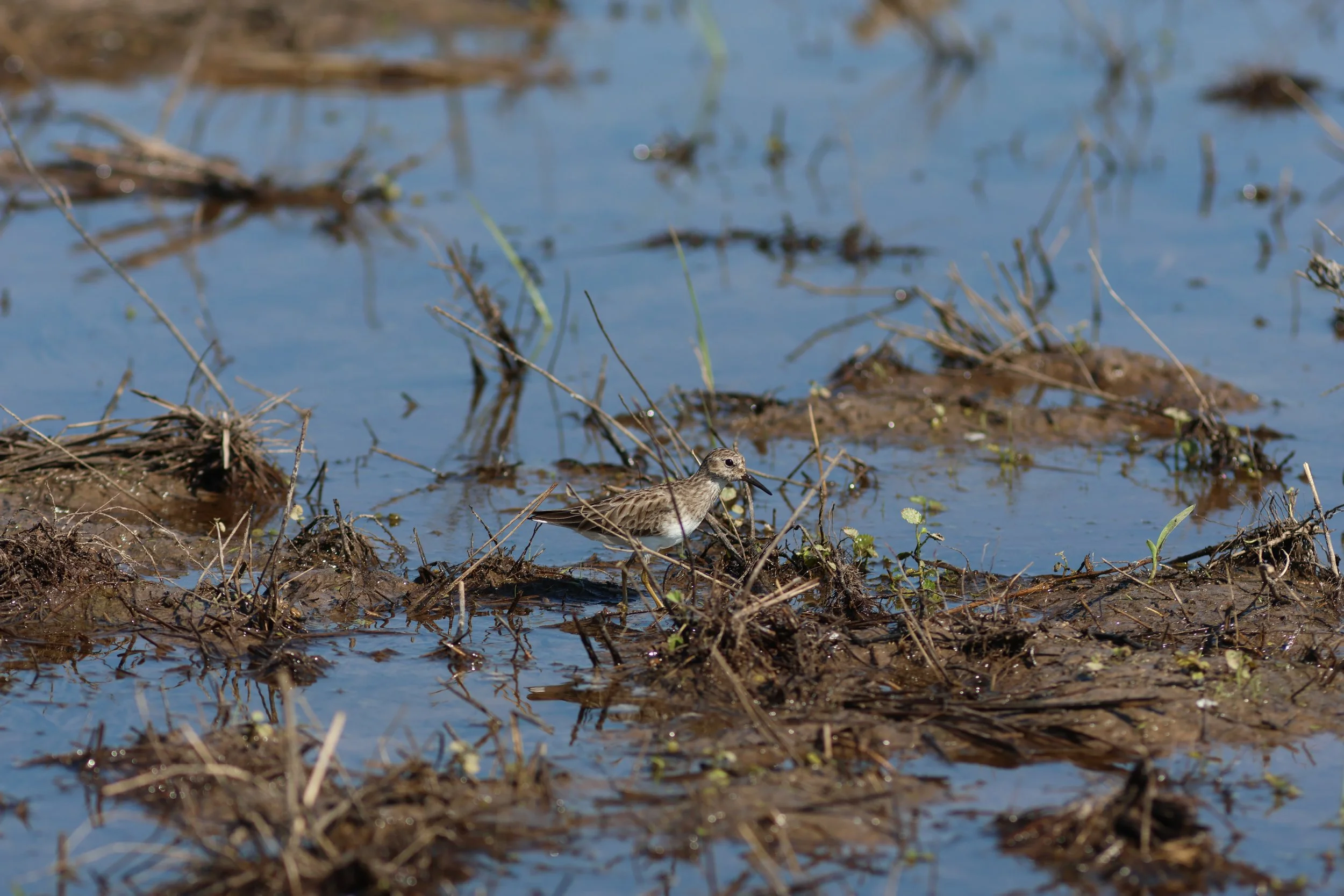
Least Sandpiper spotted at Baldpate Farms. Photo courtesy of Ryan Phillips.
Many shorebird species using Baldpate Farms have experienced significant population declines. According to a 2023 study published in Ornithological Applications by Paul A. Smith and colleagues, North American shorebird populations have declined significantly, with many species losing more than half their populations since 1980.
CBBEP is also using satellite trackers to study how migrating shorebirds use wetlands like those at Baldpate Farms. Their research has revealed that some birds wintering in Texas travel as far as Russia to breed.
These findings highlight the hemispheric significance of privately managed wetlands like Baldpate Farms, which provide critical stopover habitat for migratory birds traveling thousands of miles between their breeding and wintering grounds.
Permanent Protection, Lasting Conservation
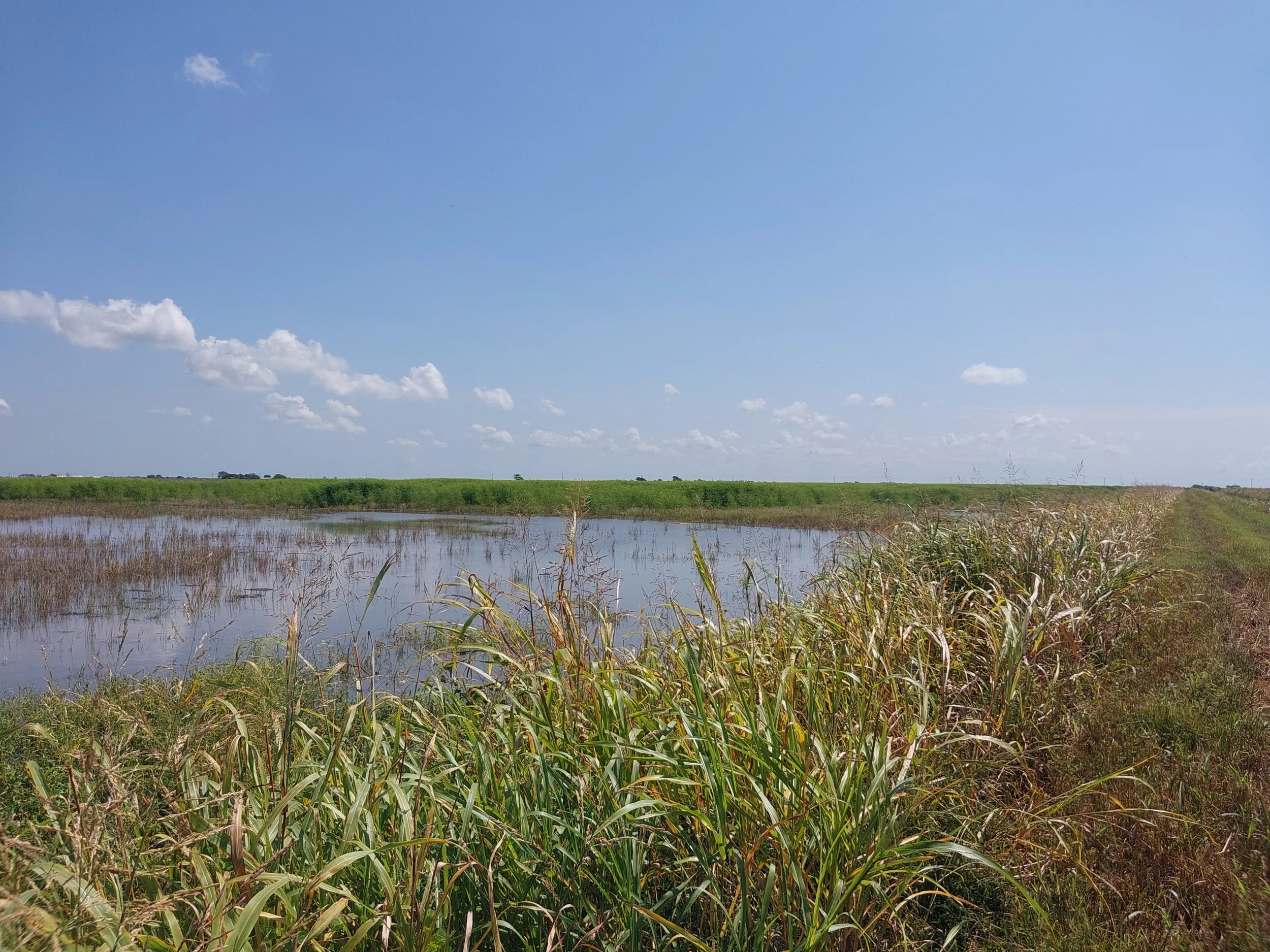
Photo courtesy of Roger Soape
Through CPC's conservation easement, Baldpate Farms' wetlands, prairie, and woodlands are permanently protected while allowing for continued habitat management and compatible land uses.
Roger's dedication, alongside the support of conservation partners, has transformed the property into thriving wildlife habitat. Baldpate Farms demonstrates what is possible when dedicated landowners, conservation organizations, and restoration partners work together to protect and restore Southeast Texas's natural landscapes.
As CPC works toward its goal of conserving 50,000 acres across Southeast Texas by 2035, properties like Baldpate Farms are an important part of that vision. Each permanently protected property contributes to a larger network of conserved lands that sustain wildlife, support healthy ecosystems, and preserve the natural heritage of our region for generations to come.